


The Costa del Sol tourism boom
Content written and reviewed by Carlos Romero, an officially accredited tourist guide recognised by the Regional Government of Andalusia (GT-06/088).
How Málaga, Marbella and Torremolinos changed in the 1960s and 1970s
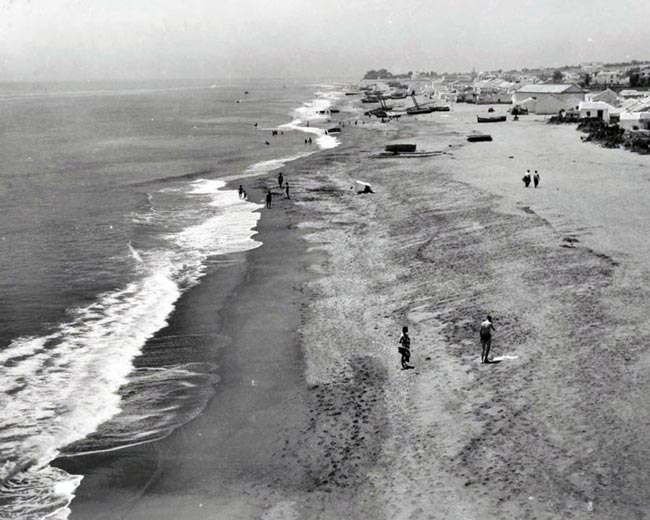
Today, it is hard to imagine the Costa del Sol without its hotels, seafront promenades, beach bars or visitors from all over the world. Yet before the 1960s, much of the Málaga coastline was made up of small fishing villages where fishing and farming set the rhythm of everyday life.
The so-called Costa del Sol tourism boom completely transformed this reality. In just two decades, Málaga went from being a virtually unknown destination to becoming one of Europe’s leading tourist destinations. Marbella began attracting aristocrats and international celebrities, while Torremolinos in the 1960s and 1970s became a symbol of modernity, leisure and freedom.
But how did this transformation come about? What turned the Costa del Sol into the place where everyone wanted to be?
The Costa del Sol before mass tourism
Before the tourism industry took off, Málaga province relied mainly on traditional activities. Its coastline was dotted with small fishing and farming communities, a world away from the international atmosphere that characterises the area today. In some outlying hamlets there were sometimes not even stretches of power line.
One of the first steps towards a tourism model came in 1925, with the opening of the historic Baños del Carmen in Málaga city. This seaside leisure space began attracting a local bourgeoisie descended from the families who had prospered with 19th-century industrialisation, who saw the beach as a place to relax and socialise.
Although the Spanish Civil War put a stop to any prospect of growth, during the 1950s new pioneers began to emerge who understood the enormous potential of Málaga’s climate, beaches and strategic location.
The pioneers of tourism in Marbella
Any account of the origins of tourism on the Costa del Sol has to begin with Marbella. One of the key figures behind its development was Ricardo Soriano, Marquis of Ivanrey, whose name is borne today by the town’s main avenue. He began buying up land in what was still a rural, relatively undeveloped Marbella. His vision laid the foundations for what his nephew, Prince Alfonso von Hohenlohe, would later transform.
Hohenlohe realised, ahead of many others, that Marbella could become an exclusive destination for international high society. In 1954, he spearheaded the legendary Marbella Club Hotel, which soon began attracting aristocrats, businesspeople and some of the best-known faces of the era.
From then on, international names such as Brigitte Bardot, Roger Vadim and Kirk Douglas began to arrive, cementing Marbella’s glamorous image and putting the Costa del Sol on the map beyond Spain.

Torremolinos in the 1960s and 1970s: the epicentre of the tourism boom
If Marbella represented luxury, Torremolinos in the 1960s and 1970s stood for something different: modernity, fun and an openness to the world.
The construction of the iconic Hotel Pez Espada, designed by Moreno and Jáuregui and opened in 1959, marked a turning point. The hotel quickly became a meeting place for international celebrities and helped put Torremolinos on the world map of tourism.
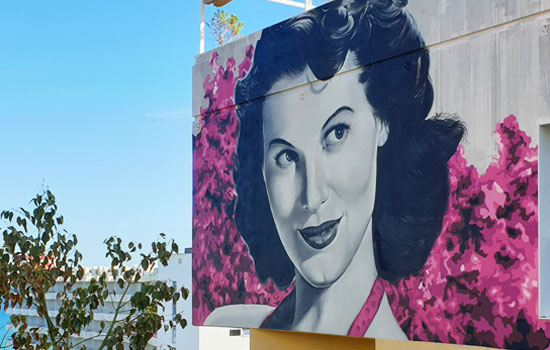
Figures such as Ava Gardner, Frank Sinatra, Kirk Douglas and Sophia Loren passed through its lounges and along its beaches, feeding the fame of a town that was beginning to experience dizzying growth. Unlike other destinations, Torremolinos offered more than sun and sea. It also offered something hard to find in the Spain of that time: a sense of freedom.
In the midst of Franco’s dictatorship, its bars, nightclubs and terraces brought together European tourists, artists, bohemians, musicians and young people looking for a more open, cosmopolitan atmosphere. It was the time of guateques (informal house-party dances), flamenco tablaos, the first discotheques and international music arriving from Europe and from the American military bases in Andalusia.
The image of the suecas (“Swedish girls”) sunbathing in bikinis (not all of them were actually Swedish; the nickname was simply given to fair-haired foreign women), together with modern music and long nights out, helped build a collective imagination that turned the Costa del Sol into the dream destination of millions of people.
Málaga Airport and the arrival of international tourism
No tourism boom would have been possible without better transport links. During the 1960s, Málaga Airport shed its former military character to become one of the main gateways for international tourism. Every year, thousands of flights landed from the United Kingdom, Germany, France, the Netherlands and the Nordic countries. That constant flow of visitors set off a genuine economic revolution.
Hotels, apartments, restaurants, travel agencies, shops and service companies began to multiply across the province. Many fishermen swapped the sea for the hospitality industry. Many families found new job opportunities thanks to tourism.
The Costa del Sol was changing for good.
The Stabilisation Plan and tourism development
Tourism growth was not solely the result of the climate or the beaches.
The 1959 Stabilisation Plan, promoted by the Spanish government, gradually opened the economy to the outside world and encouraged the arrival of international investment.
Improvements to roads, airports, hotels and infrastructure allowed tourism to start becoming one of the country’s main economic engines. The Costa del Sol was one of the regions that made the best use of that transformation.
Pasaje Begoña: freedom in a grey Spain
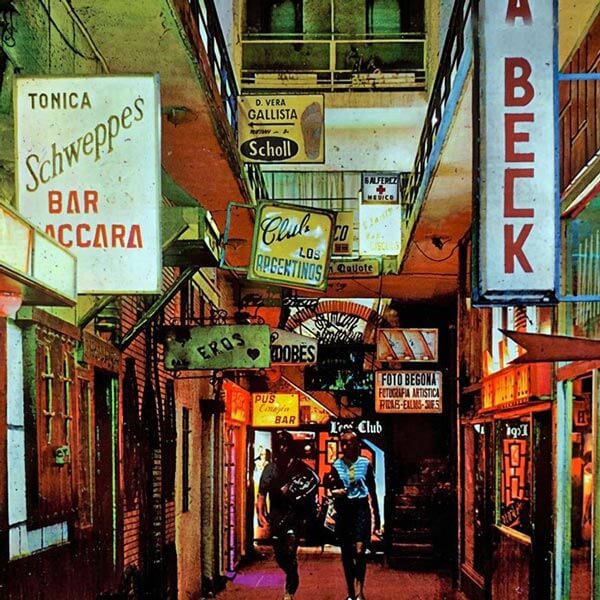
One of the most fascinating chapters in the tourism history of Torremolinos can be summed up in a single name: Pasaje Begoña.
During the 1960s and early 1970s, this small corner of the town became a place of coexistence and tolerance, something rarely seen in Francoist Spain. Its bars, venues and clubs attracted visitors from Spain and abroad, and it also became one of the first symbols of the LGBTQ+ movement in Spain.
At a time marked by censorship and conservatism, Pasaje Begoña was a small oasis of freedom where what mattered was having fun and living together without prejudice.
The Great Raid of 1971
However, this atmosphere of openness suffered a severe blow in June 1971.
What is now known as the Great Raid on Pasaje Begoña ended with hundreds of people identified and arrested in a police operation instigated by Civil Governor Víctor Arroyo, who sought to curb what the regime considered an excess of freedom.
Many visitors were deported, others were persecuted, and some ended up interned under the repressive laws of the time. Despite this, Pasaje Begoña ultimately became a symbol of resistance and is now part of Torremolinos’ historical memory.
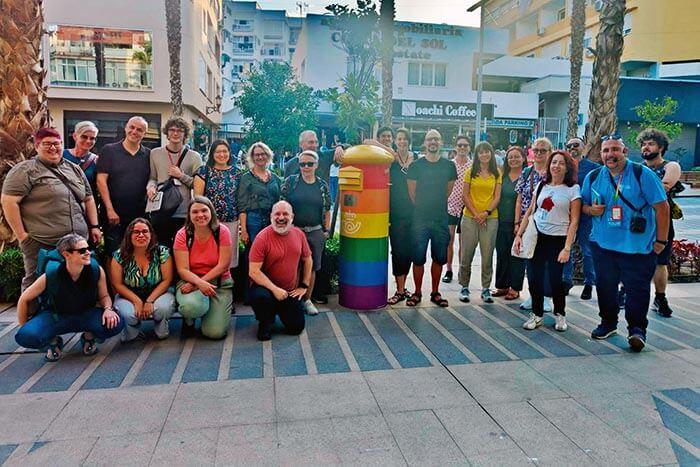
Our free tour in Torremolinos takes you back in time to explore the city’s history and discover Pasaje Begoña, the birthplace of the LGBTI rights movement in Europe.
Puerto Banús and Marbella’s international glamour
The 1970s consolidated Marbella’s international prestige. The opening of Puerto Banús in 1970, driven by the businessman José Banús, completed Marbella’s transformation into a symbol of exclusivity and luxury.
Yachts, sports cars, private parties and top-class hotels became part of the everyday scenery. The society press found the perfect stage in Marbella, and photographs of celebrities enjoying the Costa del Sol began to multiply, thanks in large part to the public relations work of figures such as Don Jaime de Mora y Aragón, Prince Alfonso von Hohenlohe and Ira von Fürstenberg, who all but patented the wild donkey parties of jet-set Marbella.
Meanwhile, places such as the Hotel Puente Romano reinforced even further Marbella’s sophisticated image as one of the Mediterranean’s great destinations.
What remains of the Costa del Sol tourism boom today?
The Costa del Sol has weathered economic crises, urban development and changes in tourism trends. Yet the legacy of that era can still be seen in almost every coastal town. Marbella remains an international benchmark for luxury tourism, while Torremolinos keeps much of the history of the tourism boom alive.
The city of Málaga has become one of Spain’s leading cultural destinations, thanks to its network of museums, heritage restoration and gastronomic scene. If you’d like to explore its historic centre and heritage, join us on our Málaga Free Tour.
Meanwhile, towns such as Benalmádena, Nerja, Mijas, Fuengirola and Estepona have embraced the legacy of those years, offering a more diverse, sustainable tourism experience adapted to new ways of travelling. The Costa del Sol continues to reinvent itself, but the events of the 1960s and 1970s remain an essential part of its identity, having transformed the province for good.
References and Sources
Bibliografía y fuentes
- Andalusian Institute of Statistics and Cartography (IECA) (organisation).
The Costa del Sol at the Dawn of Tourism Development: The 1963–64 ESBOGA Aerial Survey.
Regional Government of Andalusia, 3 May 2016. Web publication, unpaginated.
View source. - Andalusian Institute of Statistics and Cartography (IECA) (organisation).
Tourism Development and Public Programmes, 1960–1990.
Atlas of Economic History of Andalusia, Regional Government of Andalusia. Publication date: not stated on the page consulted. Web publication, unpaginated.
View source. - Provincial Historical Archive of Málaga (organisation).
The Image of the Costa del Sol in Tourism.
Regional Government of Andalusia, Provincial Historical Archive of Málaga. Publication date: to be verified. Includes documentary references and historical photographs.
View source. - Royo Naranjo, Lourdes (author).
Tourism, Development and Architecture: The Adventure of Modernity.
Regional Ministry of Public Works and Housing and University of Seville, 2013. 333 pages.
View publisher’s information.

Sara