
10 fascinating facts about Málaga you probably didn’t know
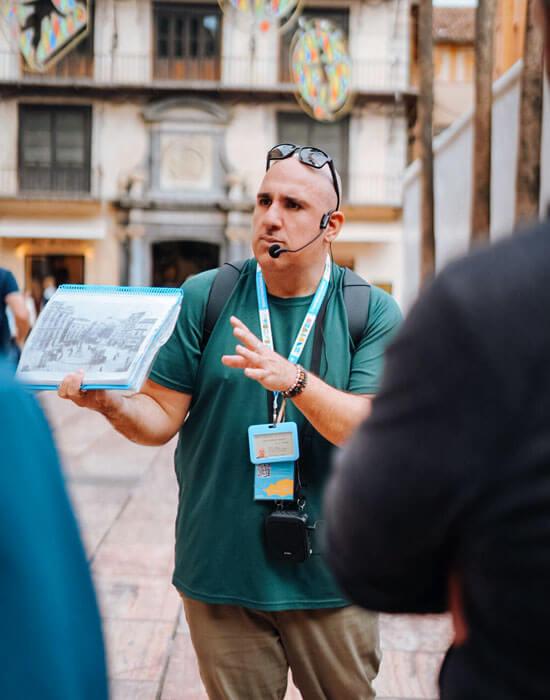
Content written and reviewed by Carlos Romero, an officially accredited tourist guide recognised by the Regional Government of Andalusia (GT-06/088). Information reviewed and updated on 19 May 2026.
Explore 10 fascinating facts about Málaga you probably didn’t know, from its history and landmarks to its gastronomy and hidden secrets.
10 fascinating facts about our city
Málaga is much more than sunshine, beaches and great weather. With over 3,000 years of history, the capital of the Costa del Sol is one of Europe’s oldest cities and a destination full of fascinating facts that can surprise even those who have visited before.
If you want to discover the city beyond its famous landmarks, here are ten fascinating facts that will make you see Málaga in a whole new light. And if you’d like to hear these stories brought to life as you explore the city, there’s no better way than joining one of our tours in Málaga, where our local guides reveal the stories behind its rich history.
1. Málaga is one of the oldest cities in Europe
The ancient city of Malaka was founded by Phoenician settlers from Tyre around the 8th century BC. Thanks to its strategic location on the Mediterranean, it quickly became an important trading port.
Today, as you walk through the historic centre, you can still find traces of the many civilisations that have left their mark on the city.
2. The origin of Málaga’s name is still debated
Although there is no definitive theory, the most widely accepted explanation links the name Malaka to the Phoenician fish-salting industry.
Some historians believe it comes from the Semitic term MLK, related to the idea of ‘salt’ or ‘processing food with salt’, an activity that turned the city into an important trading hub in the Mediterranean. The famous Roman fish-salting factories preserved at various points across the province are a reminder of how important this activity was for centuries.
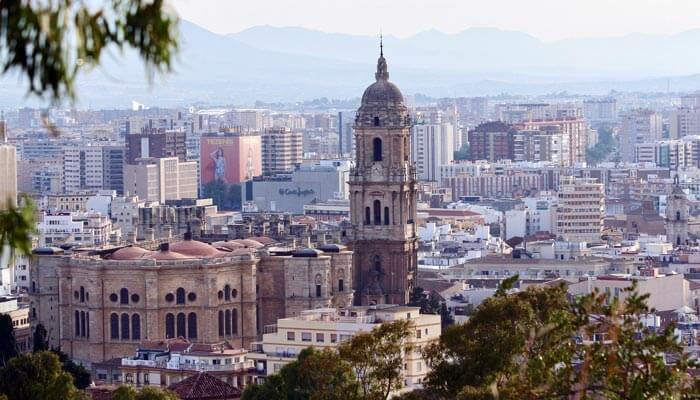
3. The Cathedral was never finished, and that is why it is called ‘La Manquita’
One of Málaga’s most iconic monuments is also one of its most peculiar.
Construction of Málaga Cathedral began in the 16th century on the site of the former main mosque, but the project was never completed and the south tower was left unfinished. For this reason, locals began affectionately calling it ‘La Manquita’ (‘the one-armed lady’), a nickname that is now part of the city’s identity.
There are several theories as to why it was never finished, although the best known holds that part of the funds was allocated to supporting the independence of the British colonies in North America. Although popular, this explanation is still debated among historians.
4. Pablo Picasso was born in Málaga
Although he spent most of his life outside Spain, Pablo Picasso always remembered Málaga as the place where he was born. He came into the world on 25 October 1881 in a house in what is now Plaza de la Merced.
Many researchers believe that the artist’s earliest years, shaped by the Mediterranean light and the city’s bullfighting tradition, left a mark that can be traced in part of his work.
Today you can visit both his birthplace, the Casa Natal, and the Museo Picasso Málaga, two of the city’s most important cultural spaces.
5. Málaga has an extraordinary range of museums
Just a few decades ago, Málaga was known mainly as a beach destination. Today it is also a cultural reference point. The city has nearly 40 museums, including:
- Museo Picasso Málaga.
- Museo de Málaga.
- Centre Pompidou Málaga.
- Museo Carmen Thyssen.
- Museo Ruso (Russian Museum).
- Museo del Automóvil y la Moda (Automobile and Fashion Museum).
This transformation has turned Málaga into one of southern Europe’s leading cultural destinations.
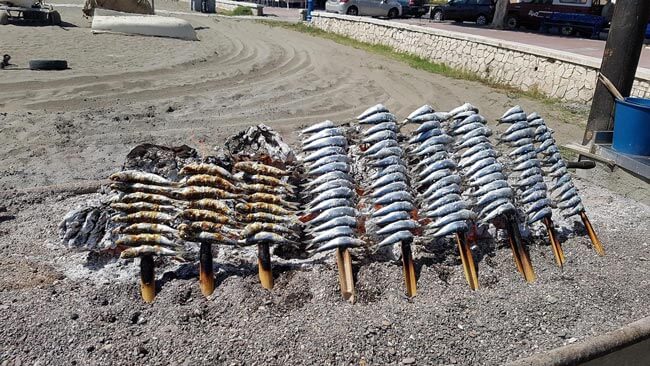
6. Espetos are one of Málaga’s great culinary symbols
The espeto de sardinas is not an invention for tourists. Its origin lies with Málaga’s old fishermen, who cooked their fish by threading it onto reed canes on the shore to feed themselves during the working day.
Over time, this simple technique became a genuine culinary tradition, and today it is one of Málaga’s great symbols. In fact, the trade of the espetero (the skilled grill master) is part of the province’s cultural heritage.
7. The Alcazaba is one of the best-preserved Muslim fortresses in Spain
Built in the 11th century during the Hammudid taifa (an independent Muslim kingdom), the Alcazaba protected the city and served as a residence for the Muslim rulers.
What many visitors do not realise is that a good part of its columns and capitals come from earlier Roman buildings. This reuse of materials, known as spolia, was very common in medieval architecture and turns every corner of the fortress into a genuine history book.
8. The Roman Theatre remained hidden for centuries
The Roman Theatre was built in the 1st century AD, in the time of Emperor Augustus. However, it remained buried for centuries and part of its stones were reused to build the Alcazaba.
It was not until 1951, during work to build a garden, that the first archaeological remains came to light. Today it is one of the best examples of how different historical periods coexist in the same space.
9. In Málaga you can travel through 3,000 years of history on a simple stroll
Few cities let you take in so many centuries of history in just a few minutes. On a walk through the historic centre, you can find:
- Phoenician remains.
- The Roman Theatre.
- The Muslim Alcazaba.
- Gibralfaro Castle.
- Renaissance palaces.
- Baroque churches.
- Contemporary art museums.
This extraordinary concentration of heritage makes Málaga an ideal city to explore on foot.
10. The best way to get to know Málaga is on foot with a local guide
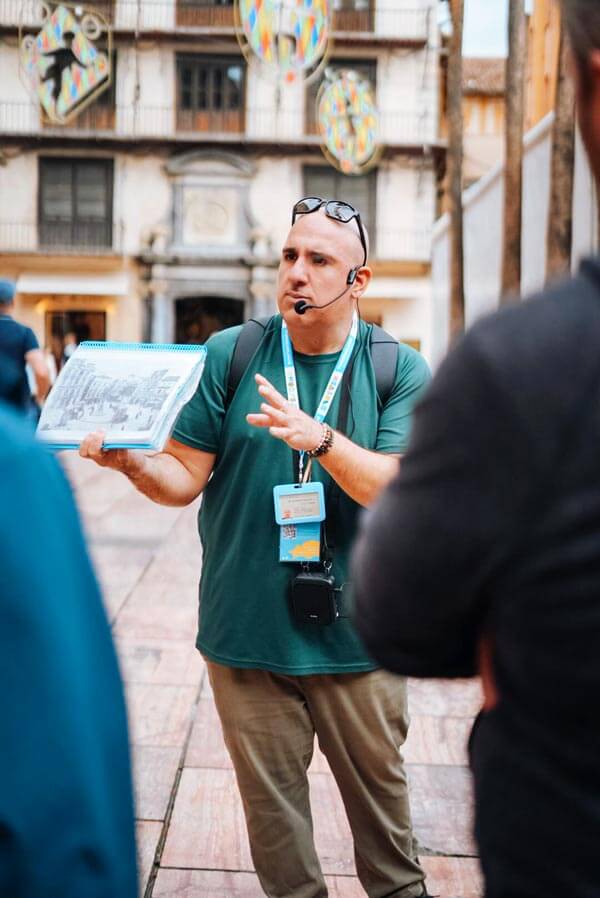
Many of Málaga’s most fascinating stories go unnoticed by those who visit the city on their own.
Did you know where the old Phoenician port was? Or why some streets still bear the names of old medieval trades? Or which buildings hide Roman remains inside them? These are just some of the curiosities that come to life on a guided tour.
Would you like to discover the history of Málaga city in an engaging and fun way? Join us on our free tour in Málaga.
References and Author
References and Sources
- Málaga City Council (organisation).
Extended History of Málaga.
Málaga City Council.
View official source. - Málaga City Council (organisation).
History of the Alcazaba of Málaga.
Málaga City Council, official website of the Alcazaba and Gibralfaro Castle.
View official source. - Turespaña, Spanish Institute of Tourism (organisation).
Roman Theatre of Málaga.
Ministry of Industry and Tourism, Spain.info website.
View official source. - Camacho Martínez, Rosario (editor) (person).
Historical and Artistic Guide to Málaga.
Arguval Publishing House.
View bibliographical reference on the Málaga City Council website.

Carlos Romero, Guía oficial de Málaga a toda costa
The content on Málaga a Toda Costa is written and reviewed by Carlos Romero, a tourism professional, official Andalusian tour guide (GT/06088), and graduate in Tourism Information and Marketing.
His knowledge of the destination is based on hands-on experience, continuous visits to tourist attractions, direct contact with the tourism sector, and the review of official sources to provide useful, up-to-date, and reliable information about Málaga and the Costa del Sol.