

Malaga Cathedral: History, architecture and how to visit

Contenido written and reviewed by Carlos Romero. Official Tour Guide accredited by the Regional Government of Andalusia (GT-06/088). Information reviewed and updated on 19 May 2026.
The history and construction of Malaga Cathedral
Talking about Málaga Cathedral means talking about one of the most iconic buildings in Andalusia.
Popularly known as La Manquita (the One-Armed Lady), the cathedral impresses visitors with both its magnificent Renaissance and Baroque architecture and the fascinating history hidden within its walls. Its unfinished tower, extraordinary choir stalls, impressive organs and rooftop tours make this monument an essential stop for anyone wishing to discover Málaga’s heritage.
Located in the heart of the historic centre, opposite Plaza del Obispo and just a few metres from the Alcazaba and the Roman Theatre, this monumental temple has dominated the city’s skyline for centuries.
Construction of Malaga Cathedral began in 1528 on the site of the city’s former main mosque, following the Christian conquest. Work continued for more than two centuries, finally coming to an end towards the close of the 18th century.
The original design was drawn up by the architect Diego de Siloé, although other master builders, including Andrés de Vandelvira, later became involved and adapted the plans over the years.
Despite the lengthy construction period, the cathedral was never completed as originally intended, mainly due to a lack of funding.
Why is Malaga Cathedral known as ‘La manquita’?
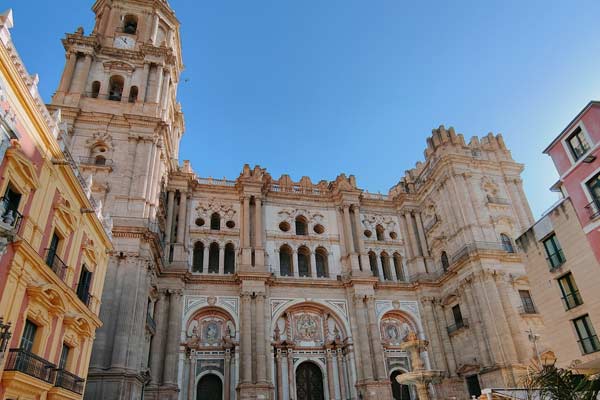
One of the most curious features of Málaga Cathedral is its nickname: La Manquita (the One-Armed Lady). The name refers to the south tower, which was never completed.
There are several theories as to why it was left unfinished, although the most widely accepted explanation points to financial difficulties during construction. Few Spanish cathedrals have a nickname as well known as Málaga’s. The explanation lies in its silhouette. While the north tower reaches a height of 87 metres, the south tower was never fully built, leaving the cathedral with an asymmetrical appearance that eventually became one of the city’s most recognisable symbols.
There are different theories surrounding this. The most widely accepted suggests that a lack of financial resources forced construction to come to a halt before the cathedral was fully completed.
Another popular local tradition claims that some of the money originally earmarked for completing the tower was instead used to provide financial assistance to the British colonies during the American War of Independence. Although this story remains part of Málaga’s local folklore, historians believe that a lack of funding was the main reason.
Whatever the definitive explanation may be, that unfinished tower ultimately gave Málaga one of its most cherished nicknames.
The architecture of Malaga Cathedral: inside and out
Malaga Cathedral is notable for its blend of architectural styles, with Renaissance features dominating its structure and Baroque elements adding richness to its decoration.
Exterior
The main façade is impressive for its monumental scale and balanced design. The north tower stands approximately 87 metres tall, making it one of the most prominent features of Malaga’s skyline.
The building is constructed from limestone, with decorative marble details in three colours sourced from quarries across the province and other parts of the Mediterranean. This gives the cathedral its characteristic pale appearance, which changes with the daylight, almost as if it were breathing in the Mediterranean sunshine.
On our free tour in Málaga, we take in the cathedral from the outside, as part of our panoramic tour.
Inside Malaga Cathedral: works of art and highlights
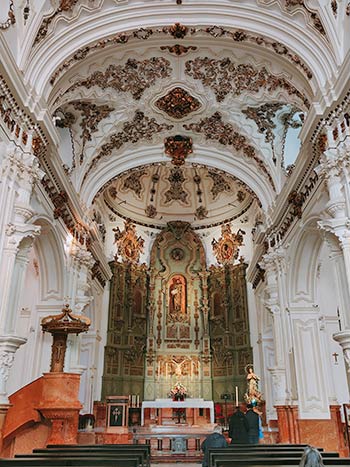
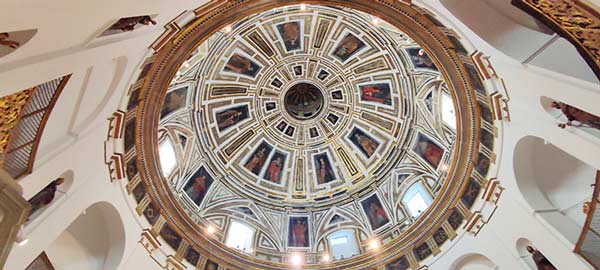
The interior of the cathedral is spacious, bright and solemn. It is divided into three naves, separated by large columns that create a distinctive sense of height and space. Some of its most remarkable features include:
- The choir stalls, considered among the finest in Spain. Carved from wood with an extraordinary level of detail, they are a true masterpiece of Spanish Baroque art.
- The main altar, featuring elaborate Baroque decoration.
- The numerous side chapels, each dedicated to a different religious devotion.
- Its two historic organs, which are still used for concerts and liturgical celebrations.
- The Puerta del Sagrario (Door of the Tabernacle). Built in the Isabelline Gothic style, it is one of the oldest features of the cathedral complex and is associated with the tradition of pardoning prisoners during Málaga’s Holy Week celebrations.
The cathedral also houses important paintings and sculptures by artists such as Pedro de Mena and Alonso Cano. Málaga Cathedral stands out for its blend of architectural styles, with Renaissance features dominating its structure and Baroque elements shaping its decoration.
Curiosidades de la Catedral de Málaga que debes conocer
The cathedral is impressive not only for its size, but also for the stories behind it:
- It was built on the site of a former Muslim mosque.
- Its unfinished tower earned it the nickname ‘La Manquita’.
- Construction lasted for more than 200 years.
- It is one of the most important Renaissance churches in Andalusia.
- It is aligned from west to east, in keeping with the religious principles of the period and the symbolic search for the Light of the World during prayer.
Malaga Cathedral: Opening times and ticket prices
If you are planning a visit, here are the main practical details:
Opening times
- Monday to Friday: 10:30 am–7:30 pm.
- Saturday: 10:30 am–6:00 pm.
- Sundays and public holidays: 2:00 pm–6:00 pm.
Free entry is available in the morning during a limited time slot.
Admission prices
- General admission: €6.
- Reduced admission: €4 (students, pensioners, people with disabilities and large families).
- Free admission: for children under 12, Málaga residents and members of the clergy.
- Combined tickets are also available, allowing you to visit Málaga Cathedral and other monuments in the city, such as the Alcazaba and Gibralfaro Castle.
Visiting Malaga Cathedral: Tickets and rooftop tours
One of the most highly recommended experiences is climbing up to the cathedral’s **rooftops**. From here, the views across the city are spectacular, with the port, historic centre and urban skyline spreading out below like a living map.
The rooftop visit includes a guided tour and lasts approximately one hour. During the visit, you’ll explore walkways, terraces and areas that are normally closed to the public, while discovering how the cathedral was built. From the top, you can enjoy views of the Alcazaba, the Roman Theatre, the port, Gibralfaro Castle and the historic centre.
It’s a highly recommended experience, both for first-time visitors to Málaga and for those who already know the city.
Horarios y entradas de la Catedral de Málaga
Opening times and ticket prices may change throughout the year, so it is always advisable to check the latest information before your visit. There are currently several types of tickets available:
- General admission.
- Reduced admission for eligible visitors.
- Guided tours.
- Rooftop visits.
Málaga residents and children below certain age limits are entitled to special conditions.
Is Málaga Cathedral worth visiting?
Málaga Cathedral is not only one of the city’s most important monuments, but also a wonderful way to understand Málaga’s historical evolution, from the Christian conquest to the present day.
Its blend of architectural styles, the quality of its works of art and the views from its rooftops make it a must-see attraction, both for history enthusiasts and for anyone wishing to discover the heritage of the Costa del Sol.
Bibliography and Author
Bibliography and sources
- Cabildo Catedral de Málaga (organisation).
Historia de la Catedral de Málaga.
Cabildo Catedral de Málaga.
View official source. - Cabildo Catedral de Málaga (organisation).
La Catedral de Málaga: arquitectura, patrimonio y riqueza artística.
Catedral de Málaga.
View official source. - Diócesis de Málaga (organisation).
Conoce la Catedral de Málaga.
Diócesis de Málaga.
View official source. - Junta de Andalucía, Consejería de Cultura y Deporte (organisation).
Catedral de Málaga.
Agenda Cultural de Andalucía.
View official source.

Carlos Romero, Guía oficial de Málaga a toda costa
The content on Málaga a Toda Costa is written and reviewed by Carlos Romero, a tourism professional, official Andalusian tour guide (GT/06088), and graduate in Tourism Information and Marketing.
His knowledge of the destination is based on hands-on experience, continuous visits to tourist attractions, direct contact with the tourism sector, and the review of official sources to provide useful, up-to-date, and reliable information about Málaga and the Costa del Sol.